Finding the balance with conference efficiency
For nearly 40 years, the
International Pragmatics Association (IPrA)
has brought together scholars from across linguistics, psychology, anthropology, and the social sciences. As the organisation evolved, so too did the scale and complexity of its conferences. IPrA needed a system that could support growth, interdisciplinarity, and continuity — without becoming bloated or unwieldy.
Since 2019, Ex Ordo has provided IPrA with a stable, intuitive conference platform that supports their core processes year after year. By replacing an in-house system with a purpose-built solution, IPrA found the balance between efficiency and flexibility — a “house” that continues to grow logically, without being ruined by ill-considered extensions.
About IPrA: A global, interdisciplinary community
Founded in the mid-1980s, the International Pragmatics Association (IPrA) is a long-standing academic society dedicated to the study of language use. Pragmatics, by its nature, is deeply interdisciplinary, drawing together researchers from linguistics, psychology, anthropology, philosophy, and beyond.
This interdisciplinarity is central to IPrA’s mission and is reflected in its flagship conference. Delegates come from across Europe, North America, East Asia, and increasingly from other regions, with attendance fluctuating depending on conference location. European conferences regularly attract over 1,500 participants, while events further afield broaden regional participation and introduce new audiences.
At the heart of these events is continuity. Conferences are not just standalone moments, but part of a long-term academic cycle, where senior scholars return year after year, bringing students who later return as established researchers themselves.
The challenge: Managing scale, complexity, and continuity
For many years, IPrA relied on an in-house platform developed by university-based computer scientists. While effective initially, maintaining and evolving the system became increasingly difficult. The platform required constant attention, and over time, it became clear that the level of ongoing investment needed was no longer sustainable.
At the same time, expectations around conference organisation were changing. Matching hundreds of abstracts to reviewers, managing increasingly complex programmes, and responding to constant participant communication placed growing pressure on a small, centralised secretariat responsible for maintaining consistent processes across conferences.
IPrA explored a wide range of options, comparing both membership systems and conference platforms. While some free tools were available, they lacked the flexibility, reliability, and support required for a conference of IPrA’s size and complexity. What the organisation needed was not experimentation, but stability.
“Our conferences bring together researchers from many different disciplines, and Ex Ordo handles that complexity very well. The submission and review process is clear and intuitive, and we receive very few complaints from authors or reviewers.”
When IPrA evaluated conference platforms, Ex Ordo quickly stood out. Even in 2017–2019, it offered a level of usability, sophistication, and support that other systems could not match. Crucially, it aligned with IPrA’s preference for well-tested processes that could be reused and refined over time.
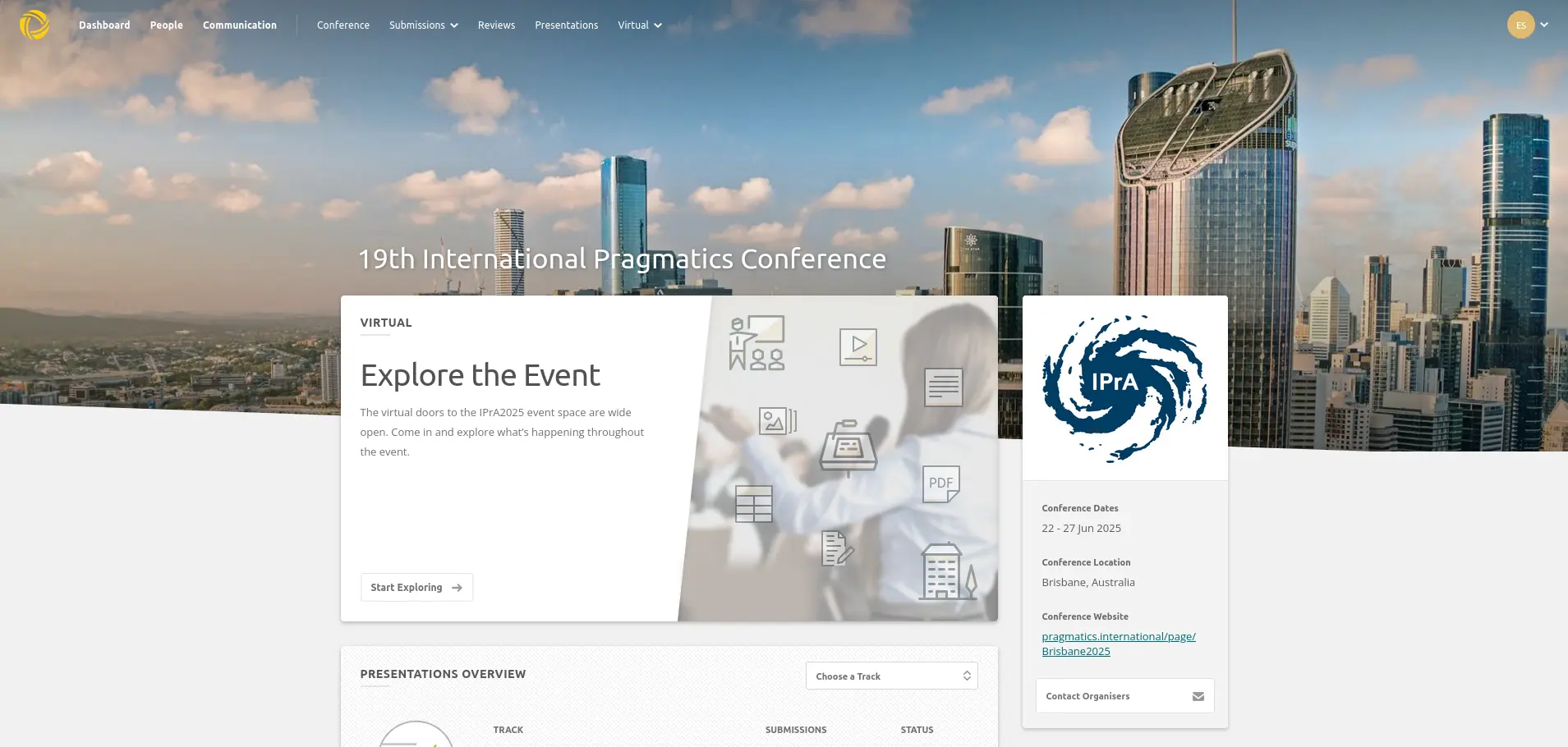
Ex Ordo became the backbone of IPrA’s conference operations, supporting submissions, peer review, programme building, final submissions, presentations, and virtual access. Single sign-on integration with IPrA’s membership system further reduced friction for delegates, providing a consistent and familiar experience.
Unlike other platforms that grow through ad hoc additions, Ex Ordo’s development felt coherent. New features integrated logically with existing workflows, avoiding the “bloatware” effect IPrA had experienced elsewhere — like a house expanded carefully, rather than patched together.
“I have seen many platforms evolve in ways that make them more complicated over time. With Ex Ordo, the changes that have been introduced over the years always fit logically with what was already there, rather than feeling like awkward add-ons.”
Features that make a difference
For IPrA, two features in particular transformed conference organisation:
Automated reviewer allocation
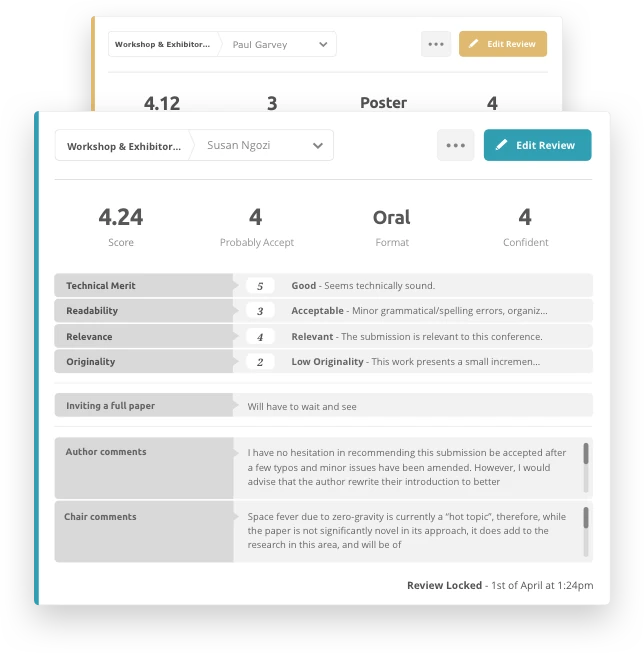
allows abstracts and reviewer expertise to be matched automatically by topic. For conferences with hundreds of submissions, this replaces days of manual work with a single action — while still preserving oversight and control.
“When you think about the number of abstracts and reviewers we deal with, the automatic allocation in Ex Ordo makes an enormous difference. What used to take days of careful manual work is now a matter of pressing a button, while still keeping full control over the process.”
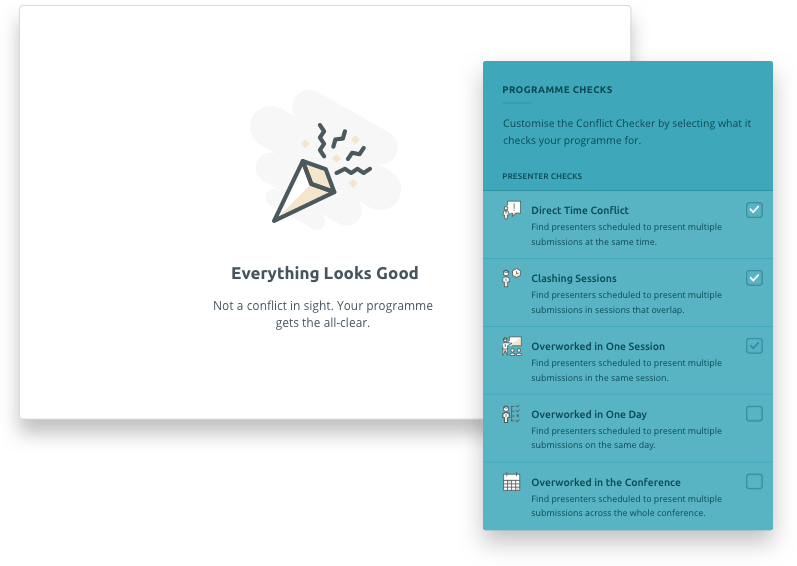
Programme conflict checking
dramatically reduces the complexity of building schedules across dozens of parallel sessions. While no system can eliminate every conflict in multi-author, interdisciplinary programmes, Ex Ordo reduces the task from days to minutes.
Equally important is simplicity. The submission process is clear and intuitive, with very few user complaints, even across a diverse, international audience.
Support that feels like a partnership
Beyond functionality, IPrA consistently highlights Ex Ordo’s support as a decisive advantage. Questions are answered quickly, solutions are provided promptly, and the team understands the realities of academic conference organisation.
For an association with a small central secretariat and rotating local organisers, this reliability matters. It ensures continuity across conferences and provides reassurance during high-pressure periods — something IPrA has not experienced to the same degree with other partners.
“The support from Ex Ordo is genuinely exceptional. I can’t remember a situation where we didn’t get a quick and effective response, and that level of reliability is extremely important when you are organising large international conferences.”
Ex Ordo has supported fully virtual, fully hybrid, and predominantly in-person events. While IPrA continues to refine its approach to hybridity, the platform itself has not been a limiting factor. Challenges arose from the nature of hybrid events, not from the system supporting them.
Looking ahead, IPrA plans to continue using Ex Ordo as the stable foundation of its conferences, with on-demand access to recorded presentations, and potentially adopt the mobile app in the future when member readiness aligns.
As IPrA prepares for leadership transition and future conferences, continuity is more important than ever. Ex Ordo has become part of the association’s institutional memory — a familiar, dependable system that supports long-established practices while enabling scale and efficiency.
By removing administrative burden without adding unnecessary complexity, Ex Ordo allows IPrA to focus on what matters most: bringing together an interdisciplinary global community and sustaining it for the next generation.
“Ex Ordo feels like a well-designed house that has grown carefully over time. It hasn’t been spoiled by illogical expansions, and that makes it much easier to hand over responsibilities to the next generation of organisers.”